
On Food Insecurity
What a little free pantry is teaching me about community.

I sobbed when I heard the news about SNAP benefits being cut. Middle-of-the-night, lying on the bathroom floor until you get a headache, sob. It was the same kind I let out the night that Tr*mp was elected (both times). To be completely honest, I’m still losing sleep over the SNAP cuts. I can’t wrap my brain around how we are a country that has enough food and resources, yet people cannot access them. The people who run the country would rather communities perish and struggle than make sure they have what they need to feed themselves or their families. And what about the children?
Food is a basic human right, and people should have the food they need to survive.
This is a problem for all of us.
When you think about it, most of us are probably a few missed paychecks away from experiencing food insecurity. As I listened to and read the conversations that people were having around the SNAP cuts and food access, I realized that most people were not making this connection.
One of the biggest problems of fighting fascism and the horrors of our world is that a lot of times, people think that their proximity to these problems is not close enough to care.
But we have to.
Our government has proven that it does not care about us, so we have to take care of each other.
The rate of food insecurity in Cuyahoga County (my county) in 2023 was 16.6%, according to Healthy Northeast Ohio, which is high compared to the surrounding counties. This is a problem happening right in our own community. This means we need to find solutions within our community to make it better.
So to meet the needs in our own neighborhood, I teamed up with Mx. Taryn, the director at Heights Cooperative Preschool, to bring the idea of a Little Free Pantry to life right outside of the school. It has been such a great opportunity for me to learn, and I wanted to bring these learnings here in case anyone was wondering about how our pantry came to be or if they wanted to create one in their own neighborhood!
So keep reading to find out more! (and please share the story with a friend!)
About Our Community Care Pantry
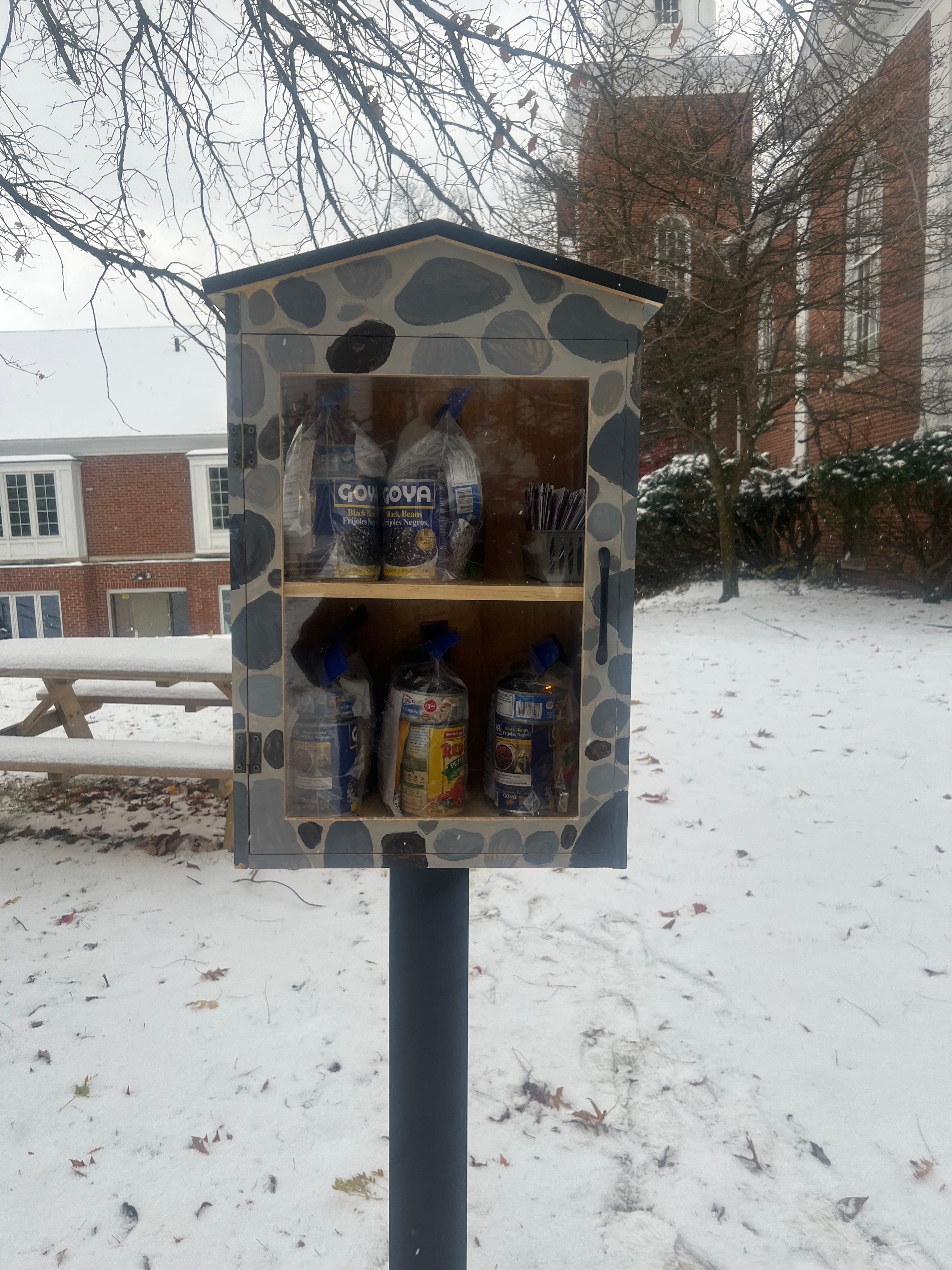
About: The Community Care Pantry began as an idea between Dr. Jasmine and Mx. Taryn, director of Heights Cooperative Preschool. Together, we created a little free pantry project in Cleveland Heights, Ohio, that provides meal kits, resources, and care. This pantry is a community effort made possible by people who believe in taking care of our neighbors and one another.
(It took many hands to get us here. Major shout-out to Taryn, Wes, Emily, and Jordan for building the pantry, painting it, adding beautiful windows, and getting it into the ground. Without them, the pantry wouldn’t be standing or as beautiful! Here’s an Instagram post with some pictures highlighting their work. Also, shout out to Richard, My Mama, and my bestie Toby for listening to my many ideas on the pantry and believing that I could bring it to life. Love all of you!)
Location: We’re in Cleveland Heights, Ohio, right outside Heights Cooperative Preschool. Here’s our listing on the Little Free Pantry map: https://mapping.littlefreepantry.org/pantry/4966
For personal context, this is the community my husband and I were both raised in, and now we’re raising our child here too. I am proud to be able to continue to build community in the neighborhood that first taught me the meaning of the word.
Meal Kits: We use meal kits because I wanted our giving to be intentional. I found the idea from Dollar Tree Dinners on TikTok. These meal bags use recipe cards with only shelf-stable ingredients you can get at Dollar Tree or for around a dollar elsewhere. (If you’re in Cleveland, you know our Dollar Trees stay empty, so I’ve had to rely on other stores.) These kits allow someone to grab a bag and make a complete meal for under $9. We’ve gotten great feedback. If you want to try some of the recipes, here’s their Linktree: https://linktr.ee/dollartreedinners?utm_source=linktree_profile_share<sid=765d90e3-d432-49c3-9968-099b4a8fccce
Zines: The education piece matters to me. I wanted grown-ups in our neighborhood to have tools to make sense of these issues, and to bring children into the process too. Right now, we have two zines I created in the pantry, and more are coming. If you make zines or know someone who does and wants to contribute, email the pantry. I love uplifting community work. thecommunitycarepantry@gmail.com
You can download the food insecurity zine I created here:
https://mailchi.mp/equityinbloom/talking-with-young-children-about-food-insecurity-zine
Talking with our important community members, the children:
Children have been seeing me at the pantry for the past few weeks, and some have even helped to fill it! Taryn (the Director of Heights Co-op) is a really amazing and thoughtful human, and wanted to be intentional in how we officially introduced the pantry to the children and families of the school community. So, in true ECE fashion, I created a social story about the pantry to introduce it to our important community members, the children!
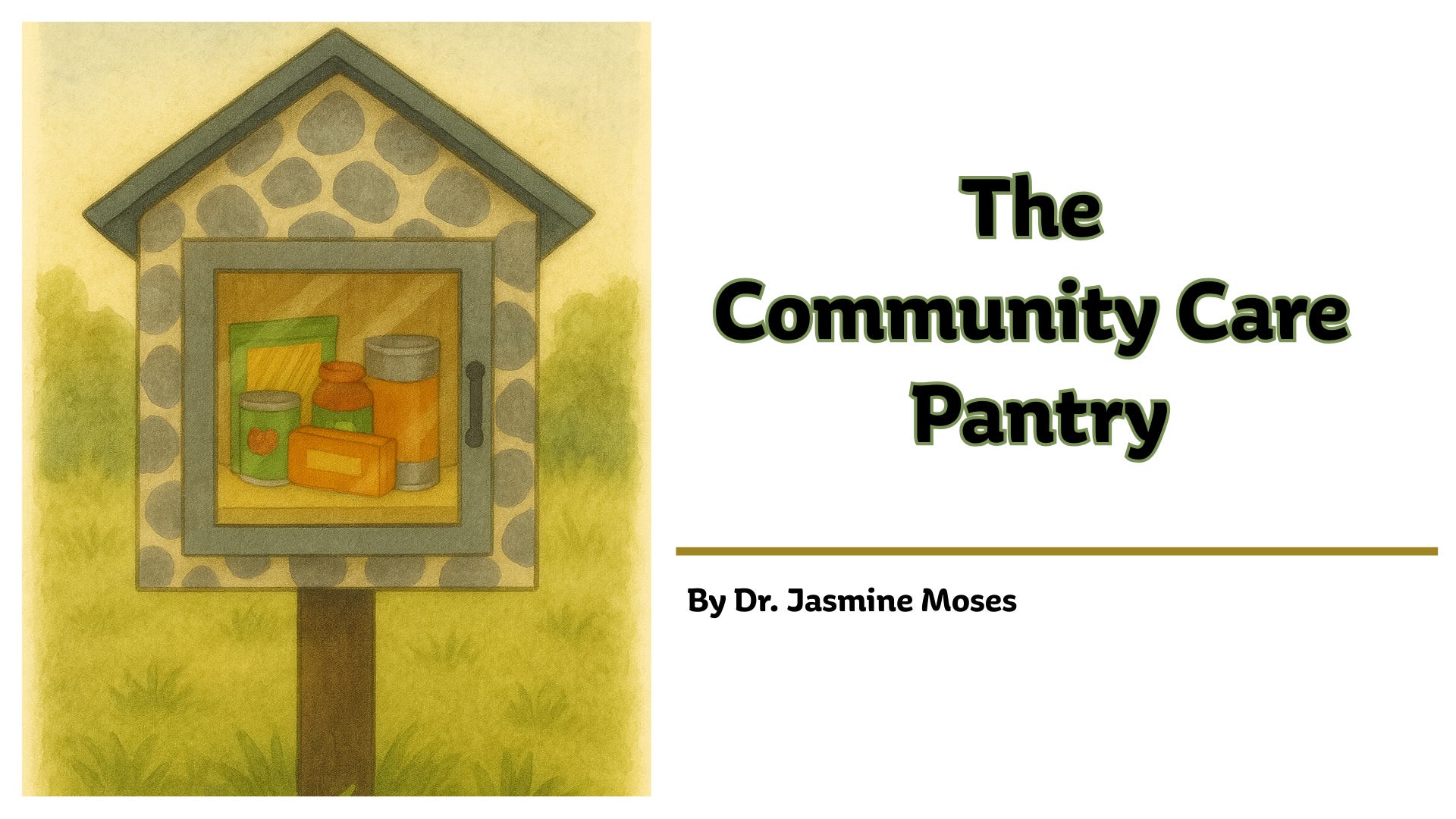
This social story will be read at the official grand opening of the pantry!
More to follow! (I will come back to update you all once the grand opening happens!)
A Beautiful Community Connection:
This project is making me see my community in a whole new light. I loved Cleveland Heights, but it has been so beautiful watching the community come together to support each other. Before writing this, I went one evening to check on the pantry and was so excited to see that neighbors had taken time over the break to fill the pantry with their own meal kits. It moved me to tears.
Thank you, neighbors, for continuously showing me that when we lean on each other, beautiful things happen.
Here are some of the meal kits that our neighbors got creative with. XO


Tips for Talking With Children About Food Insecurity
How are you talking with children about food insecurity?
These five steps come from a guest blog post I wrote for the Heights Cooperative Preschool Blog. If you’re in Ohio or curious about the stats, you can read the full post here: https://www.heightscooppreschool.org/blog.
Step one: Tell the truth simply.
You might say, “Food is grown, sold, and shared by people. Everyone needs it, but not everyone gets it. When we see that, we can help our community take care of everyone.” Clear, calm language gives children real information without overwhelming them.Step two: Reassure them.
If your child asks questions, remind them that there are helpers. “Our community works together to make sure everyone has food.” This helps children feel safe while understanding our collective responsibility.Step three: Connect it to fairness.
”Everyone deserves to have enough to eat. When that doesn’t happen, there are ways we can help.” Linking fairness to familiar experiences — sharing snacks, taking turns — helps children understand the why.Step four: Involve them in small actions.
Children learn through doing. Invite them to pick out a pantry item, pack a meal kit, or draw a picture for families. These small acts teach them they are part of a caring community.Step five: Keep the conversation going.
If a child asks, “Why do some people not have enough food?” you can say, “Because some of the people who make the rules haven’t made fair choices. But we can keep helping and speaking up so everyone has enough.” Returning to these conversations helps children see that fairness is something we work toward together.
Why Little Free Pantries Matter
Little free pantries are community staples, especially in areas where larger pantries are harder to access. In my policy work, I’ve been in neighborhoods across Ohio, and this keeps coming up in my discussions with our community members. I’ve learned (from our community members and some additional research) that many larger pantries only allow visits once a month.
Sure, some folx might travel to another pantry, but what about the ones who can’t? Caregivers working multiple jobs, disabled folx, elders, people without reliable transportation, or folx navigating chronic illness or caregiving responsibilities of their own. The list goes on, but the point is that people need resources where they can actually access them, no matter their need.
In many neighborhoods, little free pantries fill the gap. They sit right in the community, are open all day, and people can get the food and resources they need.
Supporting Book List:
There are a lot of layers to the little free pantry, and recently I posted on my Instagram about books to support conversations on Food, Caring For Neighbors, and Taking Action.


Food:
Caring For Our Neighbors:
Taking Action:
About Heights Cooperative Preschool:
I’ve been very fortunate to meet such amazing people through the Heights Co-Op. I feel very lucky to have found myself connected to a preschool program that aligns with so many of my values.
Height’s mission is to foster the social, emotional, intellectual, and physical development of our students while celebrating each child's individuality. Their philosophy is that children are naturally strong, capable learners worthy of our trust and support. They work together with students to co-create a rich learning environment, building upon each child’s interests and passions.
They are genuinely passionate about the care and journey of every child, and I am so grateful to be in community with them. Plus, their teaching team is AMAZING! If you are in the CH-UH area, please check them out for your family. If you are far but want to keep up with what they are doing, here’s their Instagram!
Find out more about Heights Cooperative Preschool: www.heightscooperativepreschool.com
Additional Resources
Want to Start Your Own Little Free Pantry? More information here: https://www.littlefreepantry.org/frequently-asked-questions
Find a pantry near you: https://mapping.littlefreepantry.org
Instagram Accounts to Follow:
@communtycarepantry
@heightscooppreschool
@littlefreepantry
Cleveland Food Access:
@clefoodnotbombs
@3_little_birds216
Pantry Friends We’ve Made:
@littlefreepantryonhummingbird
We get through hard things in community. We are the people who make sure everyone has what they need, and when they don’t, we come together to fill the gap. We take care of each other.
How are you taking care of your community?
Much love,
Dr. Jasmine